Request a quote
OLS Wins Employer of the Year at Doncaster College Student Celebration Awards

Protect production zones, enforce hygiene compliance, and manage contractor and employee access from one cloud-based platform.

OLS food factory access control gives site managers real-time control over who enters production areas, which hygiene zones they can access, and when their credentials are valid.

When a member of staff presents their credential at a door reader, the system verifies their role, hygiene clearance, and shift pattern in real time, grants or denies access, and logs the event automatically.

We support card, fob, mobile, QR code, PIN, biometric, and facial recognition credentials, all managed through the same cloud platform.

For food production environments where minimising physical contact matters, contactless methods such as facial recognition and mobile credentials reduce the number of surfaces staff touch between changing areas and production zones.

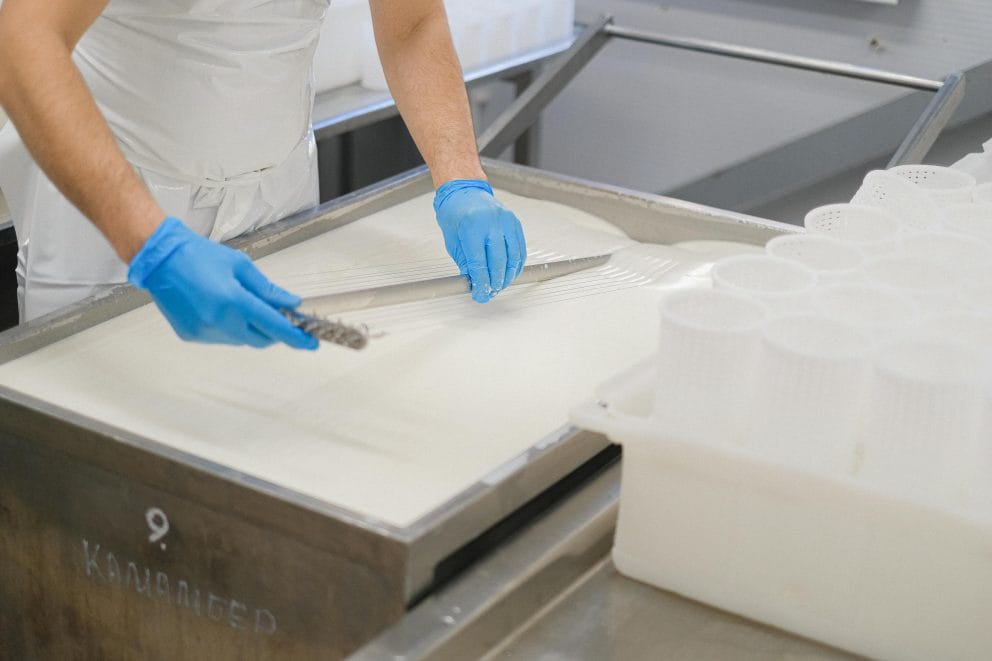
food manufacturing facility

What sets OLS apart

Hygiene Zone Enforcement at the Door

Your door readers enforce zone-level permissions automatically. Production zones are classified by hygiene level, and only staff with the correct clearance are granted entry. The system makes the decision at the reader, not at a sign on the wall.

When a member of staff is reassigned or a contractor’s scope changes, permissions update in real time across every connected door.

Contamination Response Built In

When a staff member reports illness, the system logs the event and automatically restricts their access to production zones. The restriction stays in place until they are cleared to return, at which point their credentials are reactivated. The entire sequence, from initial report to reinstatement, is recorded in the access log and available for audit. During a contamination event, the system identifies every person who entered the affected zone within a given time period and generates a report for the quality team.

Time and Attendance from the Door

Your door readers double as clocking-in terminals. Every badge, fob, or biometric scan is captured as a time and attendance record and sent directly to your workforce management, payroll, or ERP platform. No separate clocking machines, no duplicate data entry, and no need to reconcile access logs with timesheets.

In-House Integration Development

Our development team builds bespoke connections between your access control platform and third-party food manufacturing, quality management, HR, and payroll software.

We support open API integrations for real-time data exchange and automated flat file (CSV) transfers for legacy or on-premise systems that do not offer an API.

CCTV + Access Control Convergence

Your video surveillance and door access share a single management platform. Verify access events at critical control points against camera footage, investigate incidents with visual evidence, and manage site security from one dashboard.

Cloud-Based and Scalable

OLS systems are built for cloud-hosted and on-premise environments.

For food manufacturers migrating from legacy infrastructure, we run configurations that maintain data flow to both old and new systems during the transition. Add a new factory, and its doors, zones, and users appear alongside your existing sites from day one.

Food factory access control features

OLS food factory access control combines door entry, contamination response, vehicle management, CCTV, and perimeter security on a single platform. Each feature is configured to match your site layout, production flow, and compliance obligations.

woman using facial recognition access control

Door Entry Systems

Door entry is the first line of access control at any food factory. For sites that operate around the clock with a mix of permanent staff, agency workers, contractors, and auditors, a reliable entry system is essential. Access can be granted by card, fob, QR code, PIN, biometric profile, or facial recognition. Permissions are configured by role and hygiene clearance, so a production operative cleared for a restricted production zone enters automatically, while a maintenance contractor is directed only to the areas relevant to their visit.

Illness and Contamination Response

This feature is specific to food manufacturing environments.

When a member of staff reports illness, the system logs the event and automatically restricts their access to production zones. The restriction stays in place until the individual is cleared to return. During a contamination event, the system identifies every person who entered the affected zone within a given time period, restricts further access to that area, and generates a report for the quality team. Visitors and contractors can also be sent policies and declarations to sign digitally before arrival, so compliance is documented before they set foot on site.

barrier access control system

Gates, Barriers, and Turnstiles

Physical barriers manage vehicle and pedestrian access at the factory perimeter and between internal zones. Gates and barriers control delivery and dispatch traffic, while turnstiles manage foot traffic at building entrances and between production zones. Turnstiles support anti-passback, so each person must badge individually, providing an accurate headcount for evacuation purposes and a reliable audit trail of zone transitions. Tripod turnstiles, full-height turnstiles, speed gates, and interlocking doors are all available.

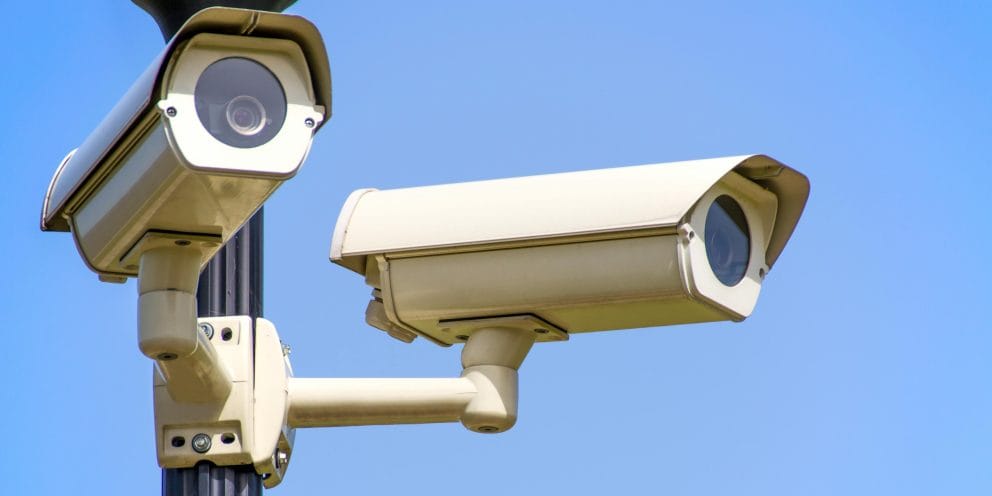
CCTV Caneras

Video Surveillance Systems (VSS)

CCTV and access control share a single management platform.

When an access event occurs at a critical control point, whether that is a door to a production line or a goods-in area, the camera covering that entry is already recording. Managers can review footage alongside the access log, timestamped and zone-tagged, without switching between systems. Footage is retained and available for audit and investigation.

thermal imaging camera

Thermal Perimeter Protection

Thermal cameras detect body heat rather than relying on visible light, making them effective at factory perimeters where external lighting is limited. A thermal detection event triggers an alert and can be cross-referenced with the nearest access reader to determine whether the movement is from an authorised person or a potential intruder.

black car

ANPR/LPR Vehicle Access

Automatic number plate recognition manages vehicle entry at factory gates. Pre-approved delivery and collection vehicles are recognised on approach, and the barrier lifts without manual intervention. Unrecognised plates are held at the gate and verified through an intercom or mobile notification.

For food factories with frequent raw material deliveries and finished goods collections, ANPR reduces queue times and provides a timestamped log of every vehicle that enters and leaves the site.

Access control and food safety compliance

Food safety audits require documented evidence that access to production areas is controlled, that hygiene zones are enforced, and that only authorised personnel enter sensitive environments. For most food manufacturers, meeting these requirements still relies on a combination of paper sign-in sheets, physical keys, and manual checks at zone boundaries.

When an auditor asks for proof of who entered a restricted zone on a given date, the evidence is often incomplete, difficult to retrieve, or both.

Cloud-based access control replaces that process with time-stamped, zone-tagged access logs that are generated automatically every time a credential is presented at a reader. Reports can be generated and exported on demand. The data is always current, always available, and does not depend on anyone remembering to fill in a sheet.

The system also provides an audit trail for contamination response.

When illness is reported, the sequence of restriction, clearance, and reinstatement is logged automatically. Auditors can see not only that the response happened, but exactly when each step occurred and which zones were affected.

For food manufacturers undergoing regular food safety or retailer audits, this level of documentation is the difference between a finding and a clear pass.

How OLS Connect integrates with your factory systems

OLS Connect supports two integration methods, and most deployments use a combination of both.

Where supported, OLS Connect establishes secure API integrations that synchronise employee records, access permissions, and attendance data in real time. This enables immediate data exchange between your access control platform and your ERP, HR, quality management, or payroll software without manual imports or scheduled file transfers.

For systems that rely on file-based data exchange, OLS Connect automates the generation, transfer, and processing of flat files on a scheduled basis, keeping legacy or on-premise factory management software synchronised without requiring changes to your existing IT infrastructure.

Every integration is configured to your specific requirements. We map data fields, align update frequencies, configure exception handling, and test each connection end to end before go-live. Once deployed, OLS Connect runs in the background with automated monitoring, flagging failed synchronisations or unexpected data before it reaches downstream systems.

Contact Us

The advantages of Food Factory Access Control

Increase security and hygiene compliance: Protect production zones, enforce hygiene boundaries, and provide documented evidence for food safety and retailer audits.
Fully customisable to your factory requirements: Working with both API and flat file integrations, hosted in the cloud.
Ongoing cost savings: Less administration, one system to maintain, and no on-site server infrastructure within the factory environment.
Enhanced security as your data is always up to date: Permissions, credentials, and access logs synchronise in real time across all connected doors, zones, and sites.
Works with both API and flat file integrations: Connect to ERP, HR, payroll, quality management, and time-and-attendance platforms.
Monitor your premises remotely, from any device: Live dashboards, occupancy data, and compliance reports accessible from anywhere.

Software integrations we offer

Frequently asked questions

Answers to common questions about food factory access control, hygiene compliance, and system integration.

What are the key benefits of food factory access control?

Food factory access control systems have many benefits, the main being the increased security and compliance they provide. Beyond restricting access to production areas, the system provides the documented audit trail that food safety and retailer auditors require: time-stamped proof that hygiene zones are enforced, that contractor and visitor movements are logged, and that contamination response is automated and recorded.

How does cloud-based food factory access control work?

Access control systems give you complete control over who enters your food factory premises and which zones they can access. Staff, contractors, and visitors are issued credentials linked to their role, hygiene clearance, and shift pattern. When a credential is presented at a reader, the cloud platform checks permissions in real time and grants or denies access. Every event is logged. OLS Connect pushes access and attendance data to your ERP, HR, or payroll platform automatically.

Will access control help us pass food safety audits?

Yes. Cloud-based access control provides the documented evidence food safety auditors look for: time-stamped proof that access to production areas is restricted to authorised personnel, that hygiene zones are enforced, and that visitor and contractor movements are logged. Reports can be generated and the data is available on demand.

Can the system scale across multiple factory sites?

Yes. New sites, doors, and users are added through the central dashboard without additional server hardware. Permissions, reporting, and zone configurations work across all connected locations from a single login.

Do we need to replace our existing security systems?

Not necessarily. OLS specialises in integrating new access control with existing infrastructure. During the pre-installation survey, we assess what is already in place and design a solution that works with your current setup. Legacy door entry hardware can often be migrated to the cloud without replacing the physical readers.

Discuss your factory access control

Contact Us

First-rate Customer Service

Latest News

Company News

OLS Wins Employer of the Year at Doncaster College Student Celebration Awards

Company News

OLS Named Finalist in Two Categories at UK Business Tech Awards 2026

Company News

OLS Wins SME Employer of the Year at South Yorkshire Apprenticeship Awards 2026!

All news